Smart home connectivity protocols: Matter vs Zigbee vs Z-Wave in 2026


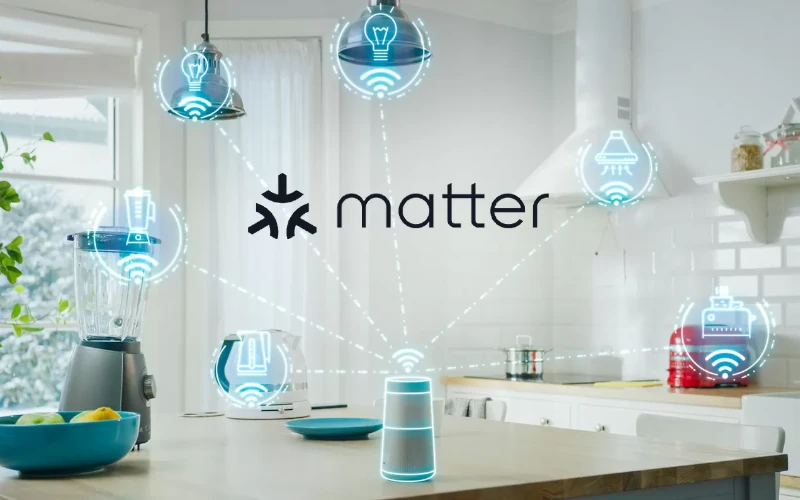
The fragmentation of the smart home ecosystem remains a primary friction point for consumers integrating internet-of-things (IoT) devices. While legacy automation frameworks relied heavily on specialized mesh networks, the global adoption of the Matter standard has fundamentally shifted the interoperability landscape. Choosing the correct underlying network layer dictates the latency, power efficiency, and long-term hardware compatibility of a modern smart home installation.
Technical architectural differences and data throughput
The functional variance between these wireless communication protocols lies in their operational frequencies and network topologies. Understanding these structural boundaries is essential for deploying a stable smart home infrastructure:




| Protocol | Operating Frequency | Data Rate | Network Topology | Maximum Device Nodes |
|---|---|---|---|---|
| Matter (over Thread) | 2.4 GHz | 250 kbps | IP-based Mesh | Uncapped (IP-routing) |
| Zigbee | 2.4 GHz | 250 kbps | Non-IP Mesh | 65,000+ |
| Z-Wave | 800–900 MHz (Region specific) | 100 kbps | Non-IP Mesh | 232 |
Matter over Thread operates over an Internet Protocol (IP) architecture, removing the requirement for proprietary hardware translation bridges between devices and local networks. Zigbee and Z-Wave rely on centralized application profiles, meaning an external translation hub must intercept and process packet telemetry before communicating with cloud systems or border routers.
Power management and spectrum interference parameters
Spectrum congestion directly impacts smart home reliability. Zigbee and Matter over Thread both occupy the globally unlicensed 2.4 GHz Industrial, Scientific, and Medical (ISM) radio band. This shared frequency introduces severe signal attenuation and packet loss in high-density residential zones due to overlapping Wi-Fi channels and active Bluetooth peripherals.
Conversely, Z-Wave operates within sub-gigahertz radio frequencies, avoiding the saturated 2.4 GHz band entirely. This low-frequency deployment allows Z-Wave waves to pass through physical barriers like reinforced concrete walls with significantly less signal decay. However, the protocol suffers from a lower maximum data throughput rate, capping at 100 kbps compared to the 250 kbps delivered by competing standard frameworks.
The long-term industry verdict and backward compatibility
The consumer electronics sector is actively consolidating around unified open-source standards. Backed by the Connectivity Standards Alliance (CSA)—a global consortium including US-based tech leaders Apple, Google, and Amazon—Matter ensures native application-layer compatibility across divergent mobile operating systems.

While millions of operational legacy Zigbee and Z-Wave nodes remain active globally, hardware vendors are phasing out independent development in favor of Thread-enabled microcontrollers. For users building a future-proof automation framework, investing in IP-native Matter devices provides the highest security profile, fastest edge-computing response times, and guaranteed long-term platform support.