Micro-LED vs. Tandem OLED: Which is the true future of premium displays?

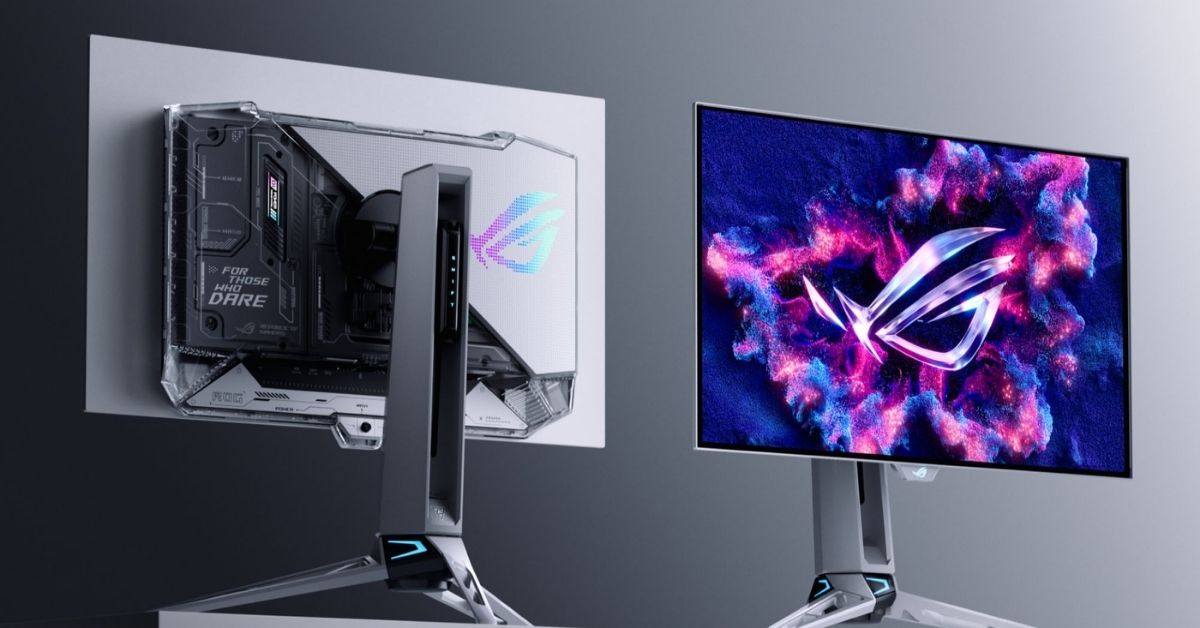
The premium display market is entering a decisive era of architectural rivalry. For years, the industry chased a singular ideal: a display that combines the infinite contrast of self-emissive pixels with the unstoppable brightness of back-lit liquid crystal panels. While standard organic light-emitting diode technology achieved the former, it historically bargained away the latter due to organic material degradation and burn-in risks.
The current landscape introduces a sophisticated bifurcation. On one side, Tandem OLED scales existing organic infrastructure by stacking light-emitting layers to multiply brightness and longevity. On the other, Micro-LED discards organic compounds entirely, relying on millions of microscopic, inorganic light-emitting diodes to establish an uncompromising structural baseline. As both technologies vie for dominance across premium consumer electronics, the question shifts from which panel looks better to which architecture scales effectively into the future.


Tandem OLED: Engineering longevity through stacked architecture
Tandem OLED represents a pragmatic, highly sophisticated evolution of organic display technology. Rather than relying on a conventional single-stack design where a lone emissive layer must generate the entire required luminance, a Tandem display places two or more light-emitting units vertically within a single structure.
This multi-layer configuration fundamentally alters the operational physics of the panel. The physical architecture places a charge generation layer between multiple emissive stacks, positioned precisely between the cathode and anode layers. By distributing the electrical and thermal workload across these stacked components, each individual layer can operate at a significantly lower current density to achieve the same target brightness. Alternatively, when pushed concurrently, the combined stacks can easily surpass standard OLED brightness limits, routinely achieving sustained full-screen luminance levels above 1,000 nits and peak high-dynamic-range highlights up to 2,500 nits.
Because the organic compounds experience drastically reduced electrical stress through this shared distribution, the primary drawback of traditional OLED panels—accelerated degradation leading to permanent image retention—is mitigated. This architectural optimization has allowed manufacturers to confidently deploy Tandem OLED into consumer form factors that frequently display static user interfaces, such as premium tablets, high-end laptops, and digital automotive cockpits.
Micro-LED: The inorganic, zero-compromise ideal
Where Tandem OLED seeks to fix the inherent limitations of organic materials, Micro-LED completely replaces them. A Micro-LED display utilizes microscopic, inorganic gallium nitride structures measuring less than 100 micrometers as individual, self-emissive pixels.
By utilizing inorganic crystals, Micro-LED eliminates the molecular decay associated with organic carbon compounds. The result is a display technology that delivers the theoretical peak of visual performance:
Immunity to image retention: Because gallium nitride does not degrade unevenly under prolonged static loads, the threat of permanent burn-in is entirely non-existent.
Unrivaled luminance: Micro-LED panels can sustain full-screen brightness levels exceeding several thousand nits, easily outperforming any organic architecture under harsh ambient light.
Superior sub-millisecond response: The switching speed of inorganic micro-LEDs is inherently rapid, minimizing pixel transition times and delivering pristine motion clarity without sample-and-hold persistence blur.
The industrial bottleneck: Mass transfer versus scaling efficiency
The ultimate trajectory of these two technologies is dictated not by their visual output, but by manufacturing scalability, material baselines, and yield economics. Tandem OLED, which relies on organic carbon compounds, holds a massive industrial advantage because it integrates directly into existing display manufacturing infrastructure. Companies can leverage established high-generation thin-film transistor backplane lines, ink-jet printing methods, and standardized vacuum deposition chambers. This structural maturity allows production lines to rapidly scale down unit costs, moving Tandem technology from ultra-premium flagships into mainstream tablets, laptops, and automotive displays within a compressed timeline.
Conversely, Micro-LED represents a completely different material class, utilizing inorganic gallium nitride crystals that can sustain a peak brightness exceeding 5,000 nits while remaining entirely immune to burn-in. Despite these superior metrics, the technology remains constrained by a monumental engineering obstacle known as the mass transfer process. Building a single 4K Micro-LED television requires precisely transferring and bonding roughly 25 million microscopic, individual LED chips onto a backplane with sub-micron accuracy. Even a minor defect rate during this transfer process destroys panel uniformity, necessitating complex, costly microscopic repair cycles. Consequently, while Micro-LED reigns supreme in specialized, large-format luxury installations or micro-displays for augmented reality hardware, it remains commercially unviable for mainstream mobile gadgets and standard consumer televisions.
Convergence and market delineation
As consumer demands intensify, the premium market is organizing into clear functional boundaries. Tandem OLED is successfully capturing the immediate future of high-performance consumer hardware. It resolves the brightness and lifespan constraints of standard OLED while utilizing a mature manufacturing framework that satisfies mainstream market economics.
Micro-LED remains the absolute technical pinnacle—the definitive endpoint for display technology. However, until fundamental breakthroughs optimize the mass transfer process to lower production costs, it will stay positioned as an aspirational, ultra-luxury tier. For the foreseeable future of premium consumer electronics, the immediate path forward is firmly stacked in tandem.