AC vs DC Charging: What’s the Difference?

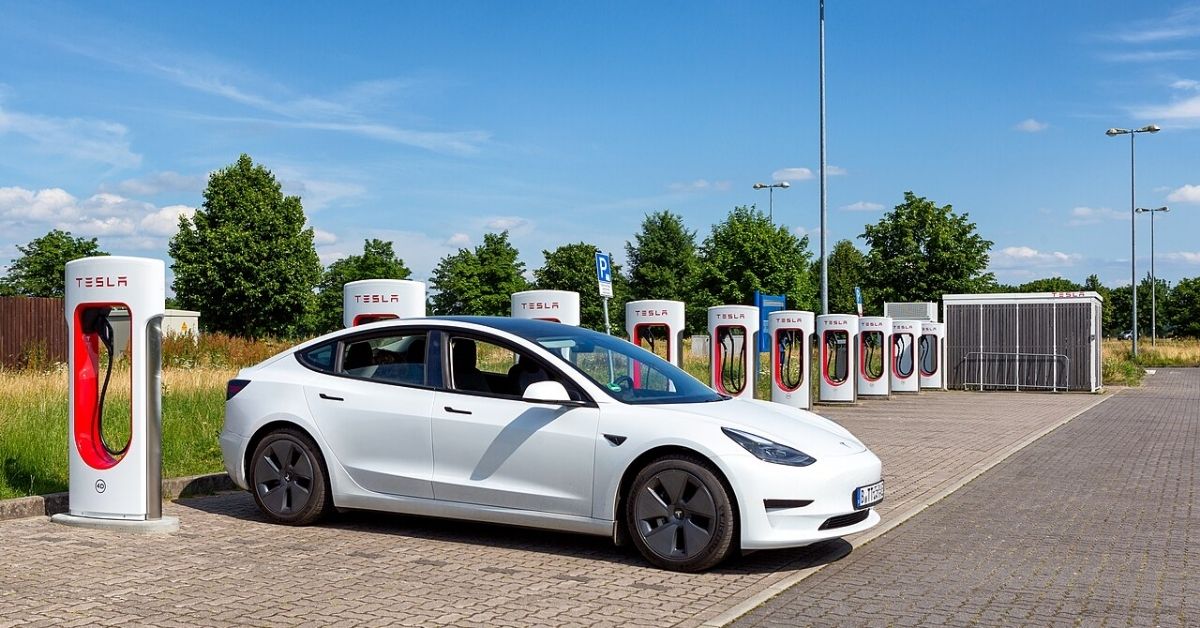
Electric vehicles can be charged using both AC and DC electricity, but the two charging methods work differently and are designed for different situations.
AC charging is commonly used at home, workplaces and destinations where an electric car can remain parked for several hours. DC charging, often called DC fast charging, is designed to deliver much more power in a shorter period and is especially useful during long-distance trips.


So, what is the difference between AC and DC charging, and which one should you use?
What Is AC Charging?
AC stands for alternating current. Electricity supplied by the electrical grid is generally delivered as AC, while an electric vehicle’s traction battery stores energy as DC, or direct current.

When an EV is connected to an AC charger, the electricity is sent to the vehicle’s onboard charger. The onboard charger converts AC electricity into DC electricity before it is stored in the battery.
This conversion is one reason why AC charging is generally slower than high-power DC charging.
What Is DC Charging?
DC stands for direct current. In DC fast charging, the conversion from AC electricity to DC electricity takes place inside the charging equipment rather than relying on the vehicle’s onboard AC charger.
The DC charger can therefore deliver high-power DC electricity directly to the vehicle’s battery, subject to the limits of the vehicle, battery and charging station.
This allows DC fast chargers to provide substantially more power than typical AC charging equipment.
AC vs DC Charging: The Main Difference
| Feature | AC Charging | DC Charging |
|---|---|---|
| Type of electricity | Alternating current | Direct current |
| Where conversion happens | Inside the vehicle | Inside the charging equipment |
| Typical charging speed | Slower | Much faster |
| Common use | Home, workplace and destination charging | Road trips and rapid charging |
| Typical power range | Lower to moderate | High to very high |
| Infrastructure cost | Generally lower | Generally higher |
The exact charging speed depends on the vehicle, charger, battery state of charge, battery temperature and other conditions.
How Does AC Charging Work?
The process is relatively simple:
- Electricity comes from the grid as AC.
- The charging equipment supplies AC power to the vehicle.
- The vehicle’s onboard charger converts AC into DC.
- The DC electricity is stored in the traction battery.
The onboard charger has a maximum power rating. For example, if an EV has a 7.4 kW onboard charger, connecting it to a much more powerful AC charging station will not necessarily make the car charge at the station’s maximum power.
The vehicle’s onboard charger is therefore an important factor in determining the maximum AC charging rate.
How Does DC Fast Charging Work?
DC fast charging uses a different architecture.
- The charging station receives electricity from the grid.
- The station converts the electricity to DC.
- DC power is delivered directly to the vehicle’s battery.
- The vehicle and charger continuously communicate to control voltage, current, temperature and charging power.
Because the high-power AC-to-DC conversion is performed outside the vehicle, DC charging can bypass the power limitations of the onboard AC charger.
How Fast Is AC Charging?
AC charging speeds vary considerably depending on the electrical system, charging equipment and vehicle.
In the United States, for example, AC Level 1 charging typically operates at around 1.9 kW, while Level 2 equipment can provide considerably more power, with some equipment capable of up to 19.2 kW.
In other markets, household and public AC charging systems can have different voltage, current and power configurations.
Because AC charging is usually slower, it is particularly suitable when the vehicle will remain parked for several hours.
How Fast Is DC Charging?
DC fast charging can provide significantly more power than typical AC charging.
The U.S. Department of Energy’s Alternative Fuels Data Center lists DC fast-charging equipment with power outputs reaching up to 500 kW, although the actual power available to a particular vehicle depends on the charging station and the vehicle’s capabilities.
Some public DC chargers can therefore add a substantial amount of driving range in a relatively short stop.
However, maximum charger power should not be confused with actual charging power. A vehicle capable of accepting 150 kW, for example, cannot charge at 150 kW continuously from 0% to 100%.
Why Does DC Charging Slow Down?
DC fast charging does not normally maintain its maximum power throughout the entire charging session.
As the battery’s state of charge increases, the vehicle may reduce charging power to manage battery temperature, voltage and long-term battery health.
This means a charging session from 10% to 80% can be much faster than trying to charge from 80% to 100% at the same station.
The exact charging curve varies by vehicle and battery system.
Why Is AC Charging Good for Home Charging?
AC charging works well at home because most vehicles remain parked for several hours or overnight.
A driver may arrive home in the evening, plug in the vehicle and leave it charging until the next morning.
The U.S. Department of Energy notes that most EV drivers charge at home using AC Level 1 or Level 2 equipment, with Level 2 providing faster charging for drivers who need more energy overnight.
This makes AC charging particularly suitable for predictable daily driving.
Why Is DC Charging Useful for Road Trips?
Long-distance travel creates a different requirement.
A driver traveling hundreds of kilometers may not want to spend several hours waiting for an AC charge. DC fast charging can add a large amount of energy during a relatively short stop.
For this reason, DC fast chargers are commonly deployed along major roads, highways and other locations where drivers need rapid charging.
Is AC Charging Better for the Battery?
It is not accurate to say that AC charging is always better for an EV battery.
Modern electric vehicles are designed to manage charging through battery-management systems that control temperature, voltage and current.
However, frequent high-power DC charging can expose the battery to greater thermal loads than lower-power AC charging. The effect depends on the vehicle’s battery chemistry, thermal-management system, charging strategy and usage pattern.
For everyday charging, many EV owners use AC charging when practical and reserve DC fast charging for situations where speed is important.
Does DC Fast Charging Damage an EV Battery?
DC fast charging does not automatically damage an electric vehicle’s battery.
Modern EVs include battery-management and thermal-management systems designed to control fast charging within the battery’s operating limits.
However, battery aging is influenced by multiple factors, including temperature, charging behavior, battery chemistry, state of charge and usage patterns.
Drivers should follow the charging recommendations provided by the vehicle manufacturer rather than assuming that every type of charging has the same effect.
AC Charging vs DC Charging Cost
The price difference depends on the electricity market and charging provider.
Home AC charging can be relatively inexpensive because it uses the vehicle owner’s electricity supply. Public AC charging may have additional network or service costs.
DC fast charging generally requires more expensive infrastructure and higher-power equipment, so public DC charging can have a higher price than slower AC charging.
There is no universal global price difference. The actual cost depends on the charging provider, location, electricity rates, membership plans and other fees.
AC Charging Connectors
AC charging connectors vary between regions and vehicle manufacturers.
Common standards include:
- Type 1: Used in some markets, particularly North America and parts of Asia.
- Type 2: Widely used in Europe and many other markets.
- J1772: A common AC charging connector in North America.
- NACS / J3400: Used for AC and DC charging on compatible vehicles and infrastructure.
The exact connector required depends on the vehicle and market.
DC Charging Connectors
DC fast charging also uses different connector standards.
Common examples include:
- CCS: A widely used DC fast-charging standard.
- CHAdeMO: A DC charging standard used by some vehicle models.
- NACS / J3400: Used for both AC and DC charging on compatible vehicles and charging networks.
The U.S. Department of Energy identifies CCS, CHAdeMO and J3400 among the major DC fast-charging connector types in its charging infrastructure data.
Can Every EV Use DC Fast Charging?
Not necessarily.
Most modern battery-electric vehicles designed for long-distance use support DC fast charging, but charging capability varies by model.
Some vehicles may have a lower maximum DC charging power, while others are designed to accept much higher power.
Before using a public fast charger, drivers should check whether their vehicle supports the connector and charging standard offered by the station.
Does a 350 kW Charger Charge Every EV at 350 kW?
No.
The charging station’s maximum output is only one part of the equation.
The vehicle also has a maximum DC charging rate. If an EV can accept up to 100 kW, connecting it to a 350 kW charger will not make it charge at 350 kW.
The actual charging power is determined by the interaction between the charger and the vehicle’s battery and charging system.
Which Is Better: AC or DC Charging?
Neither is universally better. They are designed for different charging situations.
| Situation | Recommended charging type |
|---|---|
| Overnight charging at home | AC |
| Charging while working | AC |
| Charging while shopping or dining | AC |
| Long-distance road trip | DC fast charging |
| Quick battery top-up | DC fast charging |
| Several hours of parking | AC |
AC vs DC Charging: Which One Should You Use?
For everyday driving, AC charging is often the practical choice when the vehicle can remain parked for several hours.
For long-distance trips, DC fast charging provides the ability to add substantial range during a shorter stop.
A typical EV owner does not need to choose only one method. AC and DC charging complement each other.
Final Takeaway
The fundamental difference between AC and DC charging is where the electricity is converted for the vehicle’s battery.
AC charging sends alternating current to the vehicle, where the onboard charger converts it to DC.
DC fast charging performs the conversion in the charging station and sends DC power directly to the battery.
AC charging is generally better suited to longer parking periods, such as overnight charging at home, while DC fast charging is designed for situations where charging speed matters.
Understanding both methods makes it easier to choose the right charging option for daily driving and long-distance travel.