What is Matter, which brands support it and why does it matter?

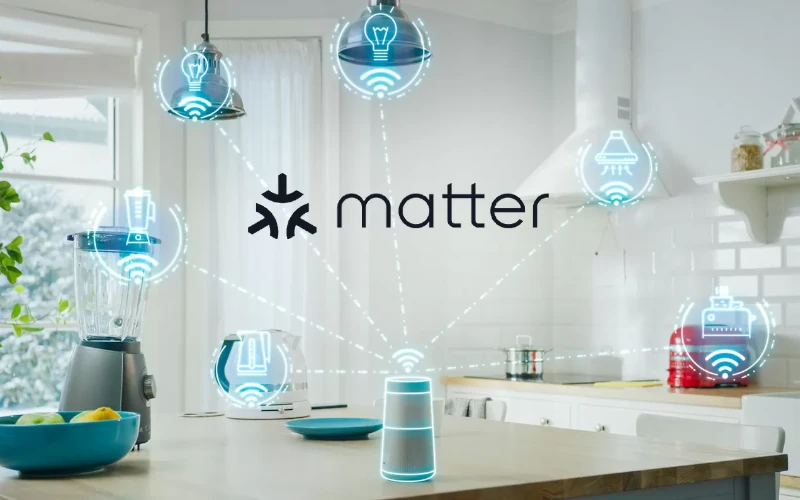
As smart home technologies continue to expand, compatibility remains one of the biggest challenges for users. Devices from different brands not working together, the need for multiple apps, and complex setup processes often limit the smart home experience. This is where the Matter standard comes into play.
What is Matter?
Matter is an open and universal connectivity standard designed to ensure that smart home devices from different brands can work seamlessly together. Developed by the Connectivity Standards Alliance (CSA), Matter aims to create a common language across the smart home ecosystem.



Thanks to Matter, a wide range of devices – from smart lighting and door locks to sensors and security cameras – can be managed through a single platform.
What does Matter do?
Key benefits of Matter include:
- Full interoperability between devices from different brands
- Control through a single app or platform
- Simplified setup and pairing processes
- Reduced latency through local network operation
- Enhanced security and privacy standards
In short, Matter makes smart homes more accessible, secure, and user-friendly.
Which technologies does Matter use?
Matter is built on widely adopted connectivity technologies:

- Wi-Fi
- Ethernet
- Thread (a low-power, fast, and local-network-focused protocol)
This structure allows Matter-enabled devices to operate within the local network even without an internet connection, offering advantages in both speed and security.
Which devices does Matter support?
While the scope of Matter continues to expand, it currently supports:
- Smart lighting
- Smart plugs and switches
- Smart door locks
- Motion, temperature, and contact sensors
- Thermostats
- Blinds, shades, and garage door systems
- Security cameras and video doorbells (with Matter 1.5)
This broad coverage positions Matter as a central standard for smart homes.
Which brands support Matter?
One of Matter’s most notable strengths is the strong backing it receives from leading industry players. Prominent brands supporting the Matter standard include:
- Samsung (SmartThings)
- Google (Google Home)
- Apple (Apple Home)
- Amazon (Alexa)
- Philips Hue
- IKEA
- Aqara
- Eve
- Nanoleaf
- TP-Link (Tapo)
- Signify
- Arlo
- Ring
- Xiaomi
- Bosch
- Schneider Electric
- NXP Semiconductors
This wide-ranging support is accelerating Matter’s adoption as an industry-wide standard.
Why is Matter so important?
Matter significantly reduces the long-standing issue of ecosystem lock-in in the smart home market. Users are no longer forced to commit to a single brand or platform, while manufacturers can reach broader audiences with lower development costs.
Over the long term, Matter also contributes to smart homes becoming:
- More secure
- More stable
- More sustainable
What does Matter promise for the future?
With future versions of the Matter standard, support for additional device types and more advanced automation scenarios is expected. Security cameras, energy management solutions, and smart city applications are among the areas where Matter is likely to play a growing role.
For users seeking a unified standard in smart home technologies, Matter is rapidly becoming a cornerstone of the connected home ecosystem.