
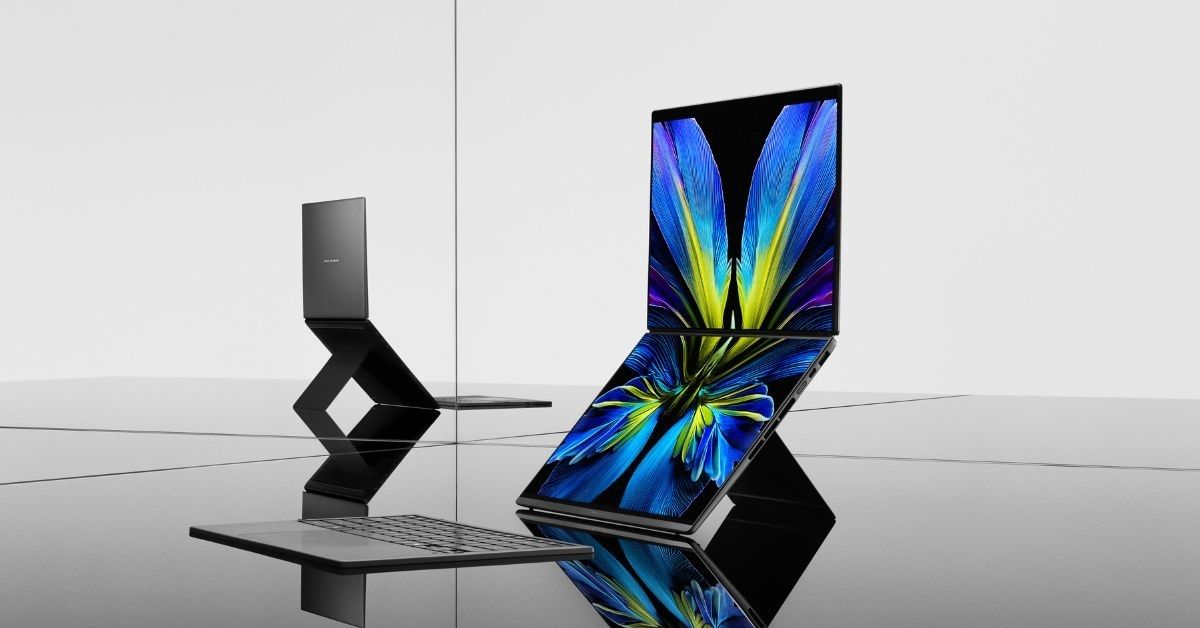
The clamshell design has dictated the fundamental form factor of mobile computing for nearly four decades. While individual internal components have undergone monumental leaps in processing density and display panels have integrated advanced organic materials, the basic physical interaction model remained remarkably fixed: a single horizontal input deck paired with a single vertical viewing plane. This rigid hardware layout forced mobile professionals to constantly switch between full-screen applications or compress overlapping windows into a highly restricted digital space.
To dissolve this visual boundary, the personal computing sector is driving a structural transformation known as the multi-screen laptop evolution. By replacing legacy keyboard decks with expansive secondary displays or deploying flexible, continuous folding panels, component manufacturers have established a completely new hardware category. As these multi-display configurations transition from conceptual prototypes into consumer retail lines, the industry must evaluate whether this architecture represents the definitive future of mobile productivity or simply a high-priced design niche for a specialized subset of users.
The engineering path to expanding visual real estate
The structural execution of a multi-screen portable computer requires solving complex thermodynamic and mechanical engineering problems that do not exist in conventional single-panel laptop assembly. Manufacturers currently employ two distinct architectural methodologies to achieve dual-display functionality within a mobile footprint.
The first configuration utilizes a rigid hinge design connecting two independent display panels. In this dual-panel operational mode, a primary upper display operates vertically, positioned directly over a secondary horizontal lower display that sits above a detachable physical keyboard or serves as a dynamic, haptic touch interface.
The second, more advanced approach utilizes a continuous, flexible organic light-emitting diode panel that bends seamlessly across a central mechanical hinge mechanism. This design creates an expanded, continuous digital canvas where the left screen area ties directly into the right screen area, allowing a user to fold the single large display in half to simulate a traditional laptop layout, or unfold it completely into a massive, uninterrupted tablet-sized workspace that can be positioned vertically using integrated kickstands.
To prevent these dual-display architectures from becoming excessively heavy or thick, silicon designers have migrated to highly consolidated system-on-chip processing lines. Integrating the processing cores, memory, and graphics accelerators into a singular, highly efficient silicon substrate minimizes internal motherboard volume. This saved interior space is then repurposed to accommodate the extra display controller hardware and the augmented cooling solutions required to dissipate heat generated directly beneath a secondary emissive layer.
Driving productivity for the hybrid and nomadic workforce
The primary value proposition of the multi-screen layout is the immediate expansion of user workspace, directly targeting the unique operational needs of modern remote professionals, software developers, and content creators.
Streamlined contextual multi-tasking: Mobile operators can position a primary creative environment—such as a video editing timeline or a software development environment—across the upper display while dedicating the lower screen exclusively to research materials, communication panels, or asset libraries.
Elimination of peripheral dependency: For digital nomads who require a multi-monitor configuration to work efficiently, a dual-screen notebook provides a complete multi-display workstation within a single integrated chassis, completely removing the need to carry external portable monitors, extra connection cables, and separate power adapters.
Adaptive software orientation: Modern operating systems can dynamically reconfigure the dual-screen space based on physical orientation. Users can rotate the device ninety degrees to read long code structures, legal documents, or digital manuscripts across two vertical pages side-by-side, mimicking a traditional open textbook.
The friction points: Battery drain, software optimization, and ergonomics
Despite these profound architectural strides, the widespread global adoption of multi-screen computing faces clear technical and behavioral hurdles. The most immediate physical constraint is accelerated power consumption. Driving two high-resolution, high-brightness panels simultaneously places immense stress on the internal battery chemistry, frequently cutting the device’s untethered operational runtime significantly compared to traditional single-screen flagships.
Furthermore, software optimization remains an ongoing development process. While basic window management is handled natively by modern operating systems, complex third-party applications often require specialized software patches to properly interpret screen transitions, maintain aspect ratio scaling, and accurately process simultaneous touch-and-stylus inputs across distinct panel boundaries.
Finally, physical ergonomics present a unique challenge. Utilizing a virtual touch-based keyboard on a flat glass surface lacks the tactile feedback of mechanical switches, often causing increased typing fatigue during prolonged writing sessions, which necessitates carrying an external physical keyboard accessory.
Delineating the future mobile workspace
The multi-screen evolution has successfully demonstrated that the traditional clamshell design is no longer the absolute limit for portable productivity. It has established a functional, high-performance alternative that provides genuine utility for professionals who manage dense, data-heavy workflows on the move.
However, this architectural expansion carries a substantial premium. Until manufacturing yields for flexible panels mature and the cost of specialized dual-display internal components drops to mainstream levels, these devices will remain positioned primarily as high-end productivity vanguards. For the broader consumer market, the standard single-screen laptop will retain its dominance, but for those who measure value through pure screen real estate and multi-tasking fluidity, the future of mobile computing is rapidly unfolding across multiple screens.