
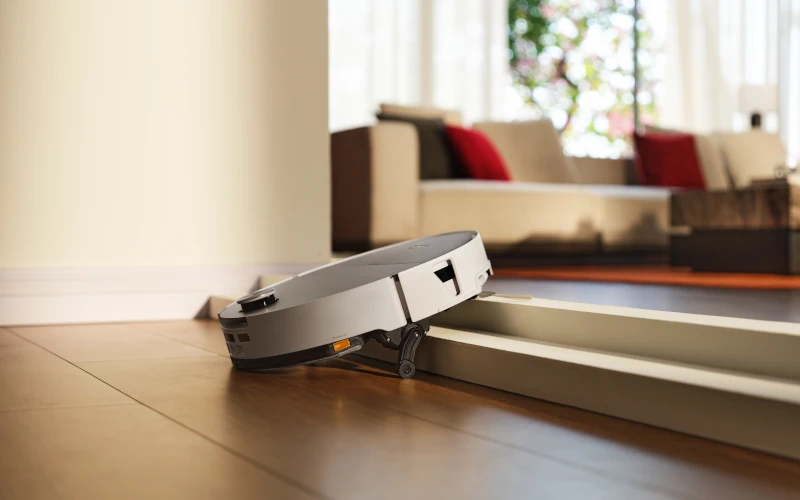
Robot vacuums are transitioning from luxury consumer items into standard household appliances worldwide. The operational scope of these devices has expanded significantly from initial product generations, which focused entirely on dry debris suction. Modern floor care systems combine advanced mechanical engineering with autonomous maintenance, introducing high temperature mop washing, independent water management, and adaptive cleaning cycles to daily home maintenance.
Implementing intelligent mapping and obstacle avoidance
The integration of navigation technologies has altered how cleaning robots interact with domestic spaces. Modern home devices utilize sophisticated Light Detection and Ranging mapping systems paired with artificial intelligence supported cameras to identify common household objects.
This hardware combination allows vacuums to detect and avoid electrical cables, footwear, and pet accessories in real time. US consumer robotics company iRobot and Chinese home appliance manufacturer Roborock continue to deploy advanced spatial computing models to improve navigation accuracy and prevent mechanical stalls during unsupervised operations.
Eliminating manual maintenance through automated base stations
The introduction of fully automated docking infrastructure represents a major shift in consumer preferences. Multi-functional docking stations manage tasks that previously required consistent manual intervention from users.
These hardware hubs automatically extract dust bags, drain contaminated water tanks, and replenish clean water supplies. Furthermore, modern base stations implement thermal washing cycles and forced air drying protocols for mopping attachments, preventing the accumulation of bacteria and eliminating unpleasant odors in residential environments.
Redefining the standard of domestic maintenance
The technical advancements in residential floor care show a strong shift toward complete operational independence. As autonomous maintenance stations and intelligent obstacle navigation become standard features, consumer purchasing decisions are increasingly driven by true hands free performance rather than simple suction metrics.