
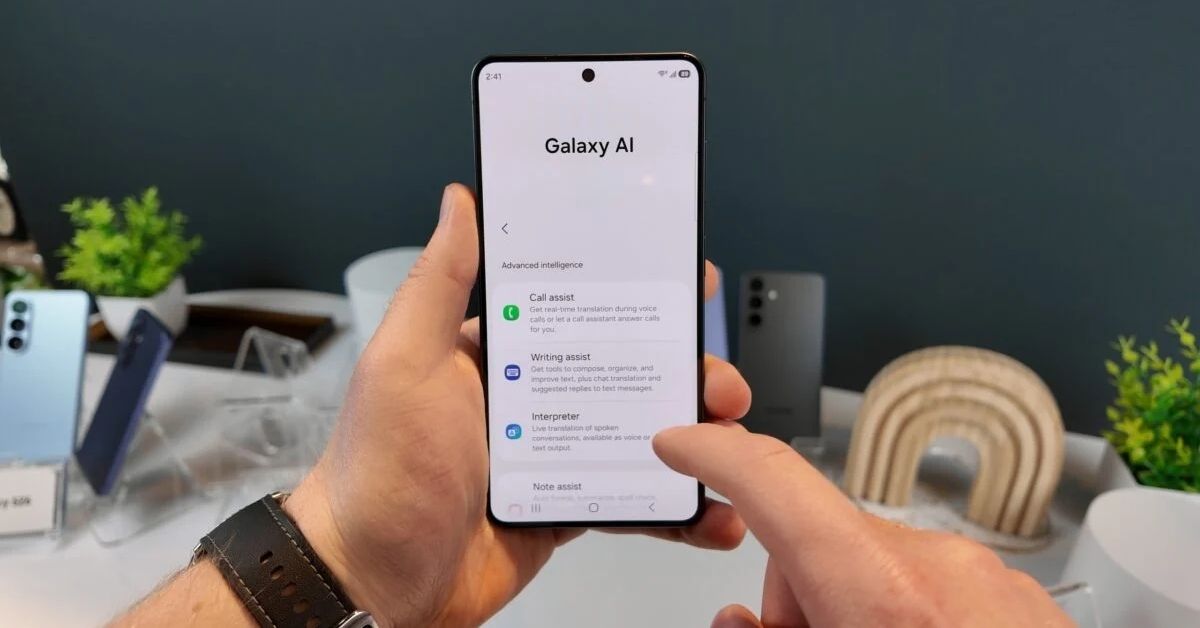
The landscape of mobile technology is undergoing a fundamental shift, moving beyond traditional generative features toward autonomous systems. While previous years focused on cloud-based chatbots and image editing tools, the current generation of personal hardware is designed to accommodate agentic artificial intelligence. This evolution changes the role of the smartphone from a reactive tool that requires step-by-step instructions to an active digital agent capable of executing complex tasks on behalf of the user.
Understanding the transition from generative to agentic systems
Traditional mobile assistants have long operated on a strict command-and-response model. A user provides a specific prompt, and the device executes a single action or retrieves information. Even early generative tools remained bound by this structure, requiring continuous human steering to produce text, code, or media.
Agentic artificial intelligence differs by introducing autonomy, reasoning, and multi-step execution. When given a high-level goal, an agentic system can break the objective down into smaller sub-tasks, plan a sequence of actions, utilize various applications, and self-correct when encountering obstacles. Instead of merely answering questions, these devices anticipate needs and handle entire workflows independently.
Hardware innovations enabling local autonomy
To support these advanced operations without relying entirely on distant data centers, hardware manufacturers are shifting focus toward localized processing. Modern mobile platforms now integrate dedicated neural processing units engineered specifically to handle complex algorithmic workflows natively.
The operational flow of agentic artificial intelligence begins when a user defines a high-level goal. The system processes this input through a strategic planning layer, breaking the main objective down into smaller, logical sub-tasks. It then coordinates across various local and cloud-based applications to execute these tasks sequentially. Throughout this execution phase, the agent continuously monitors its own progress and performance, applying self-correction mechanisms if it encounters software barriers or unexpected errors, thereby ensuring the goal is reached without requiring further human intervention.
Processing workloads locally on the device directly benefits execution speed, data security, and energy consumption. By minimizing the need to transmit sensitive personal telemetry to the cloud, on-device architecture ensures that behavioral learning, automated scheduling, and application management remain private.
Practical impacts on daily device orchestration
The practical application of agentic systems transforms how software ecosystems interact. Rather than requiring users to open multiple independent applications to complete a single objective, the operating system serves as a central orchestrator.
Cross-application workflows: A single request to organize a business trip allows the digital agent to scan emails for flight options, cross-reference personal calendars, reserve a hotel room through third-party platforms, and set appropriate travel reminders without manual intervention.
Dynamic personalization: The system continuously monitors usage patterns to optimize device performance, manage notifications based on current context, and automate repetitive digital tasks.
Contextual awareness: By analyzing on-screen information, ambient data, and user habits, the device provides relevant assistance precisely when needed, shifting from a passive interface to an active partner.
Future outlook for consumer hardware
As these autonomous capabilities mature, the physical design and software architecture of consumer electronics will continue to adapt. Future product cycles will prioritize memory bandwidth, sustained computational efficiency, and deeper software integration to ensure that digital agents can operate seamlessly across varied ecosystems. The focus of mobile technology has officially moved beyond mere connectivity, establishing a new baseline where intelligence is measured by autonomous utility.