
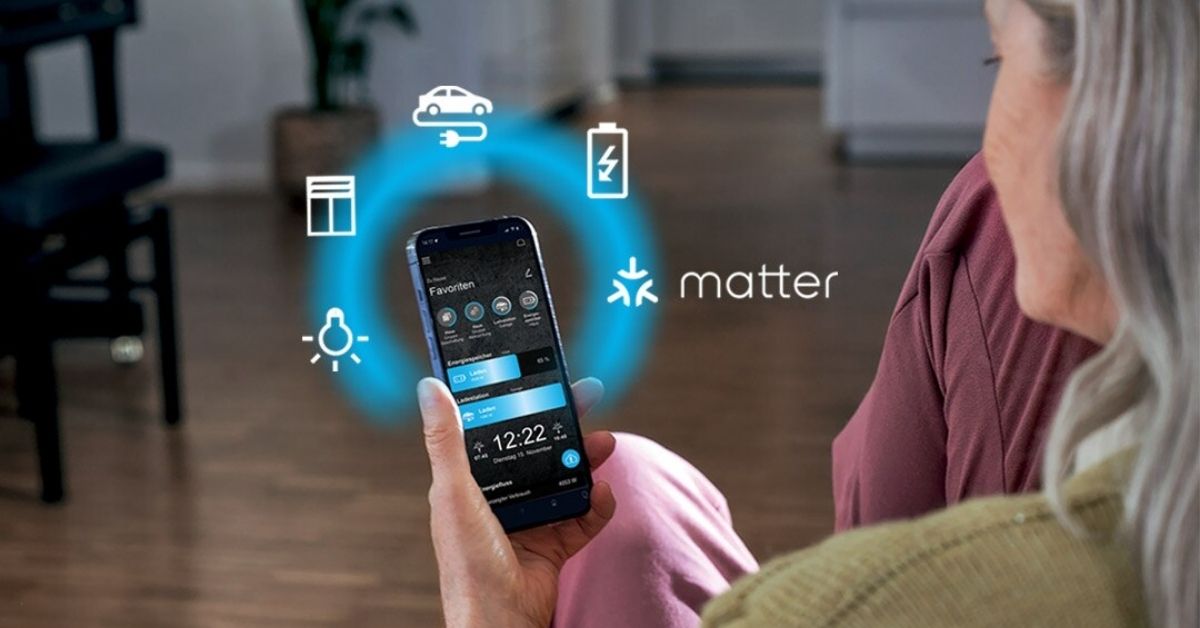
The smart home ecosystem has historically been defined by fragmentation. For over a decade, consumers looking to automate their living spaces were forced to navigate a complex maze of proprietary wireless protocols and walled gardens. Choosing a smart plug, thermostat, or security camera required verifying compatibility with specific ecosystems, such as Apple Home, Google Home, Amazon Alexa, or Samsung SmartThings.
To eliminate this friction, the Connectivity Standards Alliance launched Matter. Backed by the industry’s largest platform operators, this universal, open-source connectivity standard was designed to serve as a common language for smart home hardware. Now that the protocol has moved past its initial deployment phases and undergone multiple iterative version updates, the consumer electronics industry can objectively evaluate whether Matter has fulfilled its promise of universal compatibility or simply introduced a new layer of operational complexity.
The technical blueprint: Unified connectivity over IP
To understand Matter’s impact, it is necessary to examine its underlying architecture. Matter is not a new wireless hardware technology; rather, it is an application-layer protocol that runs on top of existing internet protocol-based network technologies. It unifies communication across Wi-Fi, Ethernet, and Thread, using Bluetooth Low Energy exclusively for the initial onboarding and pairing of new devices.
The inclusion of Thread is particularly vital for the expansion of modern smart homes. Thread is a low-power, wireless mesh networking protocol designed specifically for resource-constrained IoT devices like sensors, door locks, and light switches. Unlike traditional hubs that create a single point of failure, a Thread mesh network routes data dynamically across multiple routing nodes, increasing system reliability and lowering latency. Because Matter encapsulates these disparate transport layers into a single cohesive framework, compliant devices can interact with each other natively across a local network without relying on cloud-to-cloud integrations.
Multi-admin functionality and ecosystem independence
The most significant consumer benefit introduced by the Matter framework is a feature known as multi-admin functionality. Historically, connecting a smart device to multiple control interfaces required complex software workarounds or was structurally impossible.
With multi-admin support, a single Matter-certified device can be paired concurrently with multiple independent smart home platforms. For example, a Thread-enabled smart lock can be controlled simultaneously via an Apple TV serving as a home hub, a Google Nest display in the kitchen, and an Amazon Echo speaker in the living room. This cross-platform fluidity removes ecosystem lock-in, allowing individual household members to utilize their preferred smartphones, voice assistants, and automation dashboards to manage the exact same underlying hardware.
The persistence of feature disparity and advanced limitations
Despite these structural achievements, the path to absolute universal compatibility remains hindered by ongoing software boundaries. While Matter guarantees basic operational connectivity—such as turning a light on or off, dimming a bulb, or reading a temperature sensor—it does not standardize the advanced, proprietary features that manufacturers use to differentiate their products.
Lowest common denominator problem: Complex configurations, such as adaptive lighting curves in premium fixtures, advanced sweeping patterns in robotic vacuums, or multi-zone energy monitoring in smart plugs, are frequently unsupported by the baseline Matter specification.
Persistent vendor application requirements: To access specialized settings, perform firmware upgrades, or utilize advanced calibrations, consumers must still download and configure the manufacturer’s original proprietary application.
Delayed device category expansion: While the specification has expanded over successive updates to include major home appliances, heat pumps, and electric vehicle chargers, the implementation of these categories by individual platform operators remains uneven, leading to inconsistent user experiences.
Bridging legacy hardware to the new standard
Another critical variable in the modern smart home equation is the management of pre-existing, non-Matter hardware. Millions of consumers possess functional zigbee, Z-Wave, or proprietary radio-frequency devices that cannot be updated over-the-air to support native IP-based Matter communication due to physical hardware limitations.
To prevent premature hardware obsolescence, the industry relies on Matter bridges. Manufacturers of established smart home ecosystems have updated their central hubs to act as translation layers. These bridges take legacy Zigbee or Z-Wave commands from older sensors and peripherals, translate them into standardized Matter code, and expose them to modern Matter-compliant ecosystems. While this hybrid approach successfully extends the lifespan of older consumer electronics, it maintains a dependency on specialized hardware hubs, running counter to the ultimate goal of a completely serverless, hub-free smart home environment.
The reality of the modern smart home interface
Matter has fundamentally stabilized the foundational infrastructure of consumer IoT. It has successfully established a reliable, locally executing baseline that secures cross-platform communication and simplifies the initial setup process for standard device categories.
However, universal connectivity has not resulted in a completely uniform user experience. True compatibility now depends on software execution rather than hardware connectivity. As the protocol continues to mature, the primary battleground for the smart home will no longer be about making devices talk to one another, but about which ecosystem can build the most intelligent, intuitive automation layer on top of that shared conversation.