What Is CRM Software and Why Businesses Need It

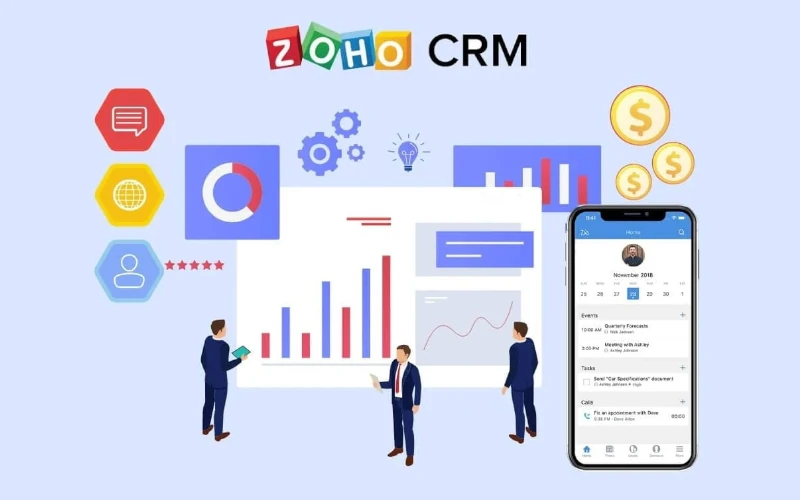
Customer relationships are no longer managed through spreadsheets, emails, or scattered notes. In today’s competitive and data-driven environment, businesses need structured systems to track interactions, understand customers, and drive growth. This is where CRM software plays a central role.
CRM, short for Customer Relationship Management, has become a core tool for companies of all sizes, from startups to global enterprises.




What Is CRM Software?
CRM software is a digital platform that helps businesses manage customer data, track interactions, and improve relationships across sales, marketing, and customer support.
At its core, a CRM system acts as a centralized database where all customer information is stored and updated in real time. This includes contact details, purchase history, communication logs, support tickets, and behavioral data.

Instead of relying on disconnected tools, teams use CRM software to work from a single source of truth.
How CRM Software Works
CRM systems collect and organize customer data from multiple channels, such as:
- Emails
- Phone calls
- Websites and forms
- Social media
- Live chat and support platforms
The software then makes this data accessible to different teams, allowing them to track the entire customer journey, from first contact to long-term retention.
Modern CRM platforms also include automation, analytics, and artificial intelligence features that help businesses make better decisions faster.
Key Features of CRM Software
While CRM platforms vary, most include several core features.
Contact and lead management
CRM software stores detailed customer profiles and tracks leads as they move through the sales funnel.
Sales pipeline tracking
Teams can visualize deals, monitor progress, and forecast revenue more accurately.
Marketing automation
Many CRMs support email campaigns, lead scoring, and customer segmentation to improve targeting.
Customer support tools
Support teams use CRM systems to manage tickets, track issues, and improve response times.
Reporting and analytics
Dashboards and reports provide insights into sales performance, customer behavior, and team productivity.
Why Businesses Need CRM Software
As businesses grow, managing customer relationships manually becomes inefficient and error-prone. CRM software addresses this challenge directly.
Better customer experience
CRM systems ensure that every interaction is informed by past data, leading to more personalized and consistent communication.
Improved sales performance
Sales teams close more deals when they have clear visibility into leads, follow-ups, and opportunities.
Stronger team collaboration
With shared access to customer data, teams avoid duplication, miscommunication, and lost information.
Data-driven decision-making
CRM analytics help businesses identify trends, measure performance, and optimize strategies.
Scalability
CRM software grows with the business, supporting more customers, users, and data without added complexity.
Types of CRM Software
CRM platforms are often categorized based on their primary function.
Operational CRM
Focuses on automating sales, marketing, and customer service processes.
Analytical CRM
Emphasizes data analysis, customer insights, and reporting.
Collaborative CRM
Designed to improve communication across departments and external partners.
Many modern CRM solutions combine all three approaches in a single platform.
Cloud-Based vs On-Premise CRM
Cloud-based CRM
- Accessible from anywhere
- Lower upfront costs
- Automatic updates and maintenance
- Ideal for remote and distributed teams
On-premise CRM
- Hosted on internal servers
- Greater control over data
- Higher setup and maintenance costs
- Common in highly regulated industries
In recent years, cloud-based CRM has become the preferred choice for most businesses.
Who Should Use CRM Software?
CRM software is not limited to large enterprises. It benefits:
- Small and medium-sized businesses
- Sales-driven organizations
- E-commerce companies
- SaaS providers
- Customer support teams
- Marketing agencies
- B2B and B2C companies
Any organization that interacts with customers regularly can gain value from a CRM system.
CRM Software and Business Growth
CRM software directly supports growth by helping businesses:
- Acquire customers more efficiently
- Retain existing customers longer
- Increase lifetime customer value
- Reduce operational inefficiencies
- Improve forecasting and planning
Companies that use CRM systems effectively are better positioned to compete in crowded markets.
Common Misconceptions About CRM Software
Some businesses hesitate to adopt CRM due to misconceptions.
- CRM is only for large companies
- CRM is too complex to use
- CRM replaces human relationships
- CRM is only a sales tool
In reality, modern CRM platforms are user-friendly, scalable, and designed to support human relationships, not replace them.
Choosing the Right CRM Software
When selecting a CRM, businesses should consider:
- Company size and industry
- Required features
- Ease of use
- Integration with existing tools
- Pricing and scalability
- Data security and compliance
The right CRM system should align with both current needs and long-term goals.
Conclusion
CRM software has become an essential tool for businesses that want to build stronger customer relationships, improve efficiency, and grow sustainably. By centralizing data, automating processes, and providing actionable insights, CRM systems help organizations turn customer information into a competitive advantage.
In a business environment where customer expectations continue to rise, investing in the right CRM software is no longer optional, it is strategic.