Air Radar Shield: Military Capabilities of the E-3G Sentry Aircraft

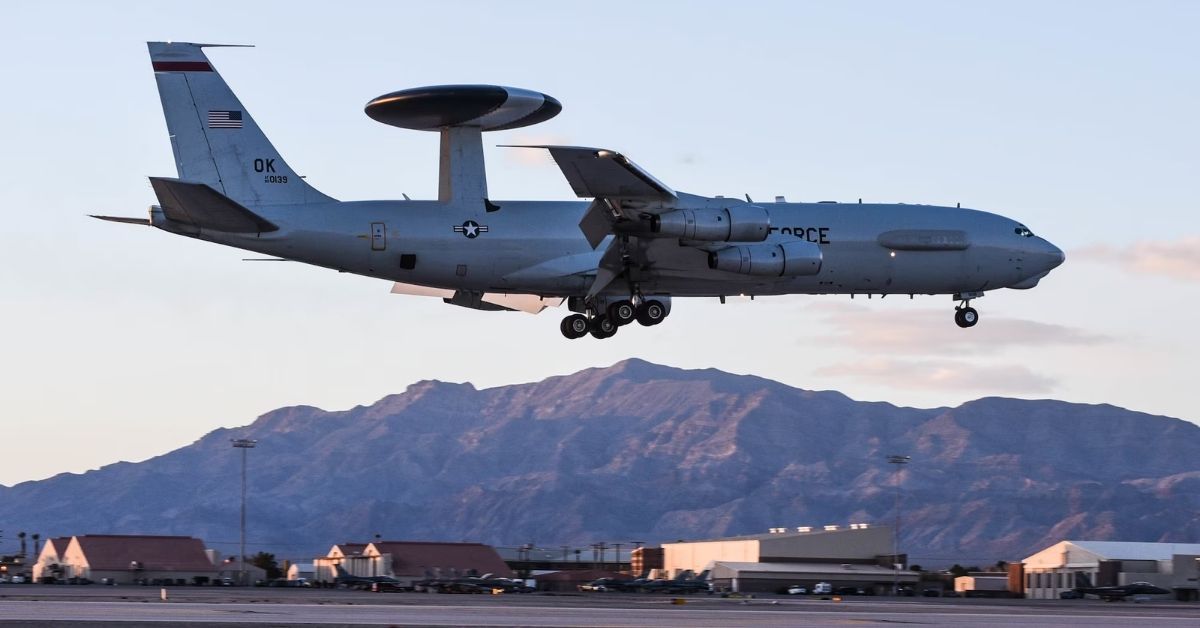
The ballistic missile and unmanned aerial vehicle (UAV) attack carried out by Iran on Prince Sultan Air Base in Saudi Arabia on March 27, 2026, resulted in the destruction of the E-3G Sentry, considered the “central nervous system” of modern air warfare. Tracking data and shared imagery confirm that the aircraft with tail number “81-0005,” belonging to the 552nd Air Control Wing based at Tinker Air Force Base in Oklahoma, has been declared a total loss. Deployed to the region as part of Operation Epic Fury, the aircraft was specifically targeted at its rear fuselage—which houses sensitive radar instruments—suggesting the strike was executed with strategic precision.
The Flying Command Center of Modern Air Warfare
Built by U.S.-based Boeing on a 707-320B airframe, the E-3G Sentry is more than just a radar platform; it is a management center that dictates operations to all assets in the sky. Featuring the AN/APY-2 radar system developed by U.S. technology company Northrop Grumman, the aircraft can scan airspace within a radius of hundreds of kilometers and track hundreds of targets simultaneously.




Detection and Tracking: Capable of detecting low-flying drones, cruise missiles, and ballistic missiles, the platform manages fighter jets, interception missions, and land-based air defense batteries in real-time.
Digital Capacity: The “G” variant signifies that the aircraft has undergone the Block 40/45 modernization package. This update allows the aircraft to process massive amounts of data in seconds and transmit it to friendly units via the Link 16 data link.
Small Fleet and Irreparable Strategic Loss
With this attack, the U.S. Air Force’s E-3 fleet has dropped from 16 to 15 aircraft. Since the production line for these aircraft, based on the legacy Boeing 707 platform, closed decades ago, it is impossible to manufacture new units.
Critical Gap: The six aircraft deployed to the Gulf region represent approximately 40% of the total fleet. The loss of a single aircraft creates a significant void in regional radar coverage, while the repair process for other damaged assets further constrains capabilities.

Lack of Alternatives: The next-generation Boeing E-7 Wedgetail platform is not yet operational and is not expected to reach the prototype stage until around 2028, indicating that the lost capacity cannot be filled in the short term.
Iran’s Strategic Targeting Capability
The attack signals a new phase in Iran’s strategy to weaken U.S. air superiority in the region. Following previous strikes targeting ground-based radar systems like THAAD, the direct hit on the airborne early warning and command layer is considered an operational turning point.
Precision Strike Capability: The destruction on the ground of an AWACS—an asset that normally flies far behind the front lines and is protected by multi-layered air defenses—has exposed the vulnerability of systems previously deemed “invincible.”
Intelligence Claims: The fact that the strike was executed with enough precision to target the radar dome, the most critical point of the aircraft, has sparked allegations of potential Russian intelligence support behind the operation.
Regional Security and Psychological Impact
The strike on locations deep within the Gulf, such as Prince Sultan Air Base, proves that nearly all U.S. bases in the region are now within reach. The loss of an aircraft described as the “eye” of U.S. Air Force operations in the region is seen not only as a technical depletion but also as a significant psychological and strategic blow.