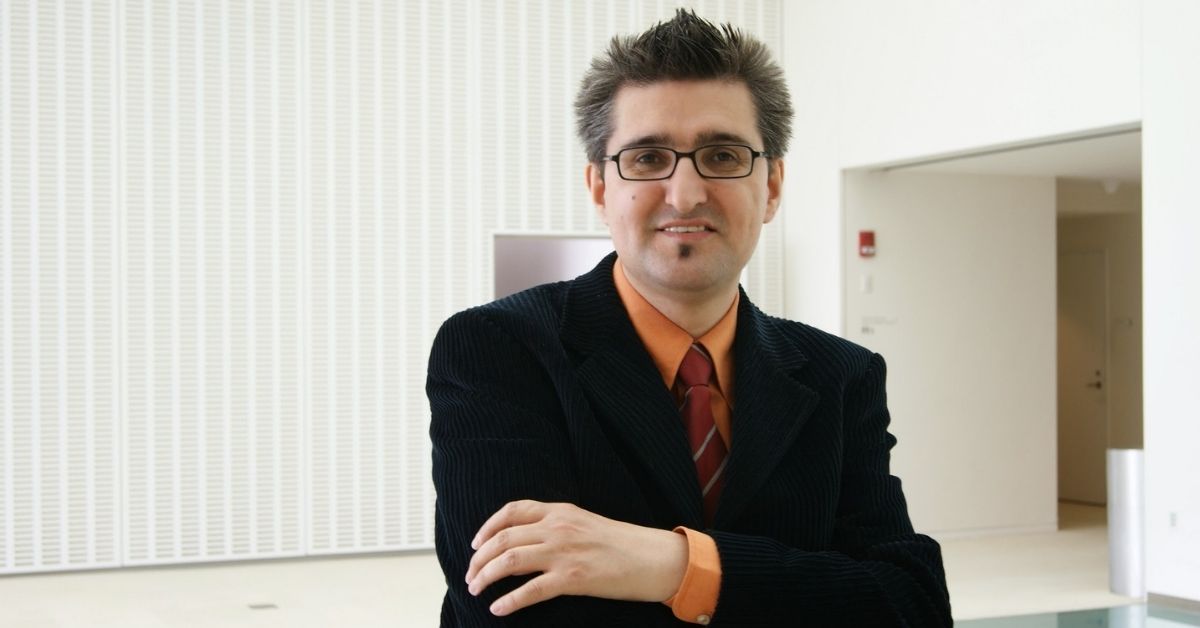
Journalist and author Melih Bayram Dede stated that advanced artificial intelligence programs capable of manipulating audio, images, and videos can produce fake content that is nearly impossible to distinguish from the truth, noting that deepfake technology has become a serious threat in terms of disinformation.
According to Dede, deep learning algorithms allow for human lip movements to be read, speeches to be reconstructed, and facial expressions to be simulated realistically. This makes it possible to show a person performing actions they never took or saying words they never uttered.
The greatest risk: Ease of access to technology
Emphasizing that one of the most dangerous aspects of this method, called deepfake, is that it has become usable without requiring advanced technical knowledge, Melih Bayram Dede expressed that relying solely on eyes and ears is no longer sufficient to distinguish such videos.
Pointing out that even people who are no longer alive today can be portrayed as if they were real, Dede said that this situation has reached a point that could fundamentally shake the “perception of reality” in societies.
The Zelenskyy example: Deepfake use in war
Melih Bayram Dede recalled that one of the most striking examples of how deepfake technology turns into a propaganda tool during wartime occurred during Russia’s invasion attempt of Ukraine.
Reminding that on March 16, 2022, Russian hackers who infiltrated the television channels of Ukraine 24 published a video of Ukrainian President Volodymyr Zelenskyy prepared using the deepfake method, Dede stated that Zelenskyy was shown as if he were making a call to surrender in this fake video.
It may not be noticed at first glance
According to Dede, a large portion of television viewers might not notice such manipulation at first. Stating that it is difficult to detect deepfake interventions unless a detailed technical examination is performed, Dede drew attention to some suspicious elements later noticed in the Zelenskyy video.
These elements included Zelenskyy’s head appearing large in proportion to his body, the lighting being different from real videos, and the audio quality being lower. However, it was emphasized that such details are often overlooked when content spreads rapidly.
Deepfake use is becoming institutionalized in the USA
Melih Bayram Dede stated that deepfake technology is not limited to isolated propaganda attempts but is handled at an institutional level in some countries. He recalled that a document prepared by the US Special Operations Command (SOCOM) to purchase various services, including deepfake technologies from private companies, was published by The Intercept.
Emphasizing that this document is one of the first concrete examples of a government openly requesting deepfake technologies for offensive purposes, Dede said this is significant in showing the point reached in information warfare.
“Next-generation psychological operation tools”
Reporting that the request list in question included headings such as computer hacking, robots, holograms, laser systems, directed energy, and electromagnetic warfare technologies, communication disruption, digital deception, and influence operations alongside deepfake, Melih Bayram Dede stated that these tools are positioned as “next-generation psychological warfare elements.”
Recalling the propaganda activities carried out through radio and television broadcasts during the Gulf War, Dede said that today these methods have become much more sophisticated and invisible.
Elections and crisis periods are at risk
According to Melih Bayram Dede, it will no longer be surprising to see a comprehensive digital deception toolkit, including deepfake technology, put into action during a possible war, invasion attempt, infiltration operation, or in a country heading toward an election.
For this reason, he emphasized that social awareness studies on deepfakes must be urgently implemented in addition to media literacy and social media literacy.
Known for his work on digital disinformation
Known for his work on digital media, disinformation, and the social effects of technology, Melih Bayram Dede has two books: “İnternet,” published by İnsan Publications in March 2004, and “Teknoloji ve Hayat,” published by Liz Publications in February 2023.