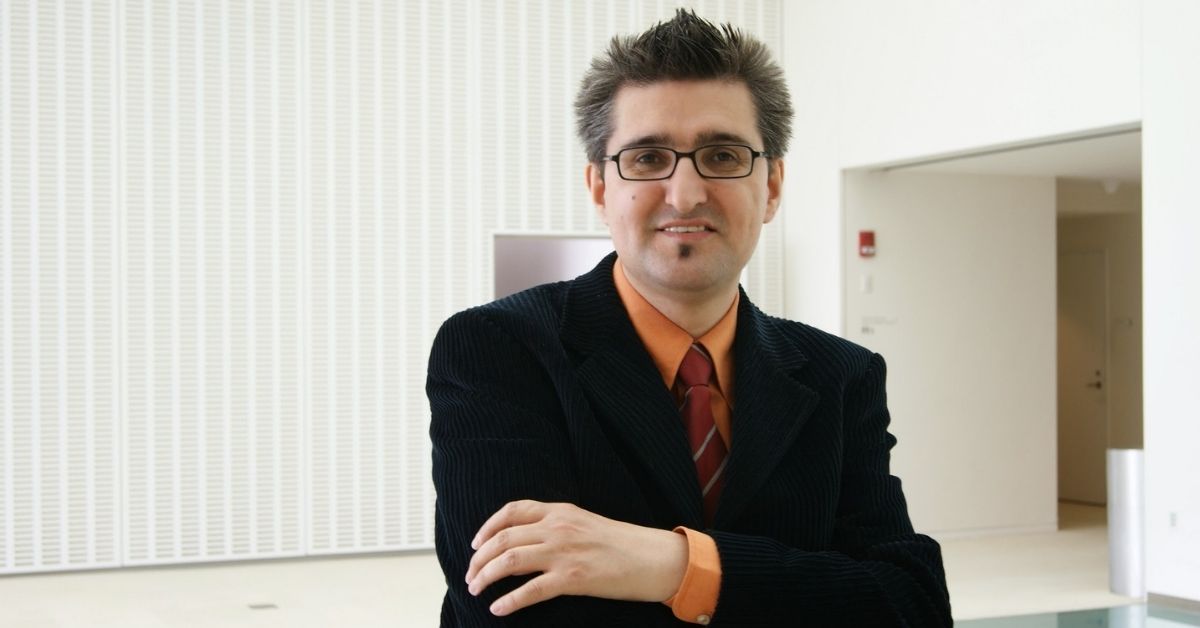
Journalist and author Melih Bayram Dede stated that with the spread of artificial intelligence technologies, individual privacy violations are increasing, and facial recognition systems have become one of the most problematic applications in this field. According to Dede, biometric data collected without user consent turns individuals into potential suspects under constant surveillance without their knowledge.
Stating that one of the most striking examples of this situation emerged with the confession made by the US-based facial recognition software company Clearview AI, Dede expressed that the company’s activities reveal privacy violations.
30 billion photos collected without consent
Recalling the statements of Hoan Ton-That, the Australian entrepreneur and founder/CEO of Clearview AI, Melih Bayram Dede reported that the company has collected more than 30 billion photos from public social platforms such as Facebook to date and has performed approximately one million face scans with these images.
Emphasizing that collecting this data without the explicit consent of users and including it in a database used by law enforcement is a clear violation of individual privacy, Dede said this means “being added to the list of potential criminals without your knowledge.”
Your photo is compared with everyone
Drawing attention to the evaluations of Matthew Guaragilia, a member of the Electronic Frontier Foundation (EFF) who conducts studies on individual privacy rights, Melih Bayram Dede shared that Guaragilia summarized the situation with the words: “Whenever they have a photo of a suspect, they will compare it with your photo.”
How the system Works
According to the information shared by Dede, law enforcement officers upload a photo they consider suspicious to the Clearview AI system. The system compares this image with billions of photos in the database and provides the internet link of the relevant photo when a match is found. Based on this match, the police can treat the person as a potential criminal and carry out detention procedures.
Innocent people detained
Melih Bayram Dede stated that there are official records of cases where innocent people were detained as a result of using facial recognition technologies. On the other hand, he expressed that law enforcement agencies do not share clear data on how many people have been victimized due to misidentification.
According to Dede, one of the most important reasons for this situation is the lack of sufficient and binding legal regulations regarding the use of facial recognition technologies by the police.
Partial bans came into effect in the USA
Recalling that after the lawsuit filed by the American Civil Liberties Union in the state of Illinois, Clearview AI, which caused grievances due to misidentifications, was banned from serving many American companies, Dede reported that the use of the system was completely banned in some cities such as Portland, San Francisco, and Seattle.
However, stating that Clearview AI CEO Hoan Ton-That said the police are exempt from these bans and hundreds of police units across the USA continue to use the system, Dede emphasized that US police departments avoid making a clear public statement on this issue.
Only institution admitting to use the system: Miami Police
Melih Bayram Dede stated that the only official institution that openly confirmed using Clearview AI is the Miami Police. According to the statements of Miami Assistant Police Chief Armando Aguilar, it is argued that the system is used an average of 450 times a year and contributes to solving some murder cases.
Constant surveillance, permanent risk
According to Dede, such systems keep everyone who is face-scanned constantly on the radar of law enforcement. Clearview AI, which collects biometric data of millions of people through illegal means and sells this data to public institutions and private companies, has been fined millions of dollars many times in Europe and Australia due to these activities.
Emphasizing that despite all these fines and reactions, the company continues to generate income by turning individuals’ private data into a commercial product, Melih Bayram Dede stated that the grievances experienced as a result of wrongful detentions are pushed out of company responsibility with the justification of “misuse of the system by the police.”
Warning about digital privacy
Known for his work on the internet, digital surveillance, and the social effects of technology, Melih Bayram Dede has two books: “İnternet,” published by İnsan Yayınları in March 2004, and “Teknoloji ve Hayat,” published by Liz Yayınları in February 2023.